This article may include affiliate links. We may earn a commission from purchases, at no extra cost to you. Read our disclosure.
Table decorations deserve only the space the meal can comfortably spare. A candle arrangement or collection of small objects may look appealing before plates arrive, then make conversation and serving awkward. Test the table as an occupied setting first, and let its everyday function determine how much decoration belongs there.
Set the actual places
Use the dishes, glasses, and cutlery appropriate to the meal and the people attending. Check seated comfort, necessary access, and the room available for serving. Include individual needs rather than assuming every guest uses the same place setting or can reach the center of the table.
Try the setup with chairs occupied where practical. A centerpiece that looks modest from above may block a person's view or crowd their glass. Keep the edges and serving routes usable. The table should support a comfortable meal without requiring guests to protect decorative objects from every ordinary movement.
Choose one suitable element
Select a decoration that fits the occasion and the space left after the meal is planned. Read product instructions and consider material, stability, household safety, and any guests' sensitivities. Decorative items are not automatically suitable beside food, heat, or young children.
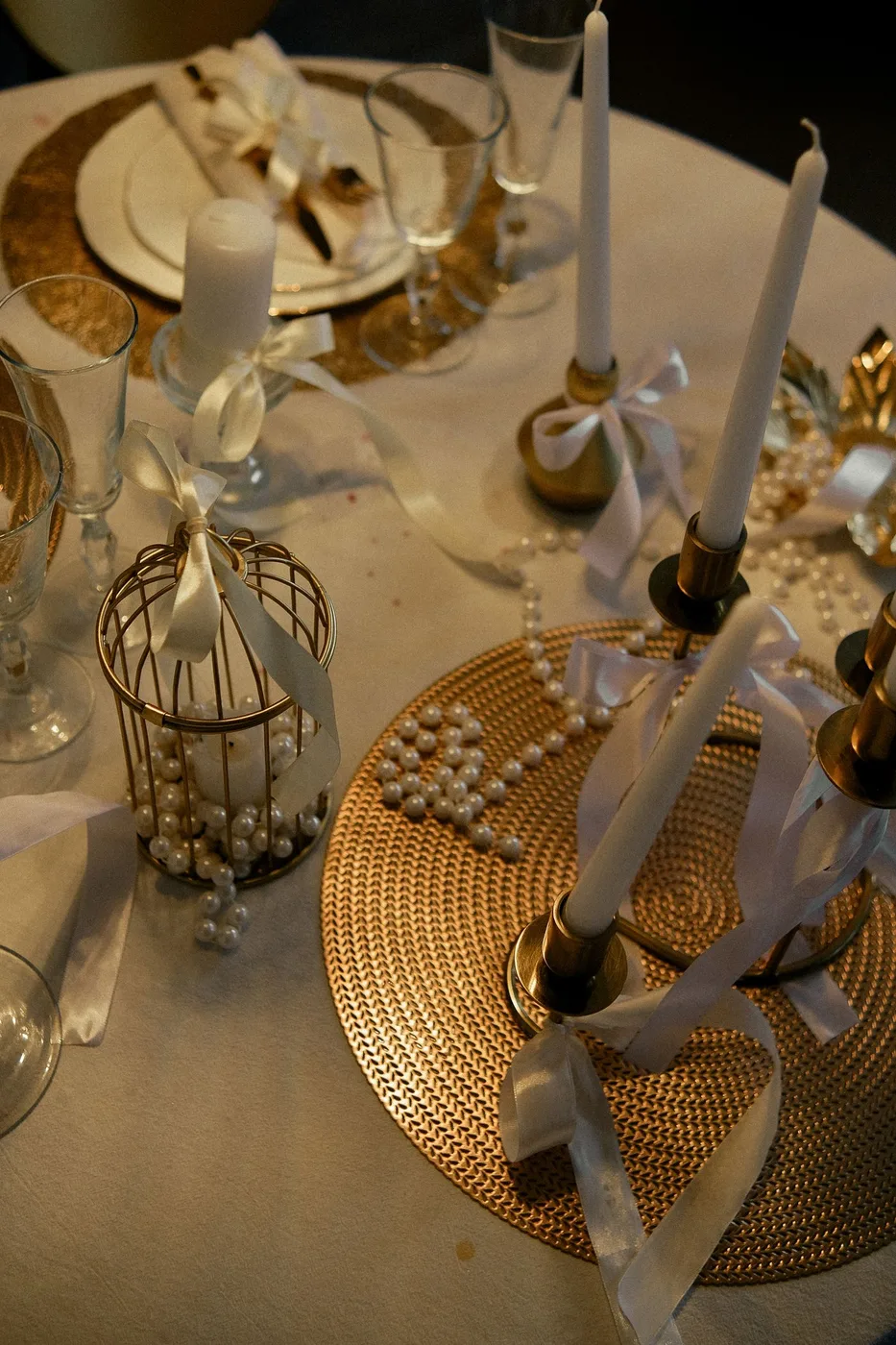
If candles are involved, follow authoritative fire-safety guidance and the manufacturer's instructions, including appropriate holders, clearances, and supervision. Choose a suitable alternative when those requirements cannot be met. A pleasant table does not depend on a flame, and an unlit decorative candle still needs an appropriate position.
Keep serving objects distinct
Do not let a decorative bowl become a food vessel unless it is suitable for that use. Keep necessary food and allergen information available, and use appropriate serving utensils. A coordinated appearance should not hide the practical differences between objects meant for display and those intended for eating.
Our relaxed weekend lunch guide helps prioritize the meal and company. You may prefer a small arrangement elsewhere in the room, leaving the dining surface clear for the activity people came to enjoy.
Give decorations a return place
Before setting the table, decide where objects will go afterward. Follow their care and storage requirements, especially for fragile, scented, or heat-related items. Avoid leaving a collection on the table indefinitely because its proper home is full or difficult to reach.
The small-kitchen counter reset applies a useful question to shared surfaces: what needs to happen here next? A dining table may become a work or hobby surface after the meal, so finish the decorative setup with a complete return.
Should the arrangement match the dishes? Only if you enjoy that choice and the actual use still works. Coordinated colors do not compensate for blocked sightlines, unsuitable materials, or a crowded place setting. A restrained arrangement with clear practical space can feel considered without requiring another purchase.
Planning references: NFPA: Safety with candles. Confirm current arrangements with the relevant provider.