This article may include affiliate links. We may earn a commission from purchases, at no extra cost to you. Read our disclosure.
Inviting one person for dinner can feel more intimate and more pressured than feeding a group. With only two plates on the table, you may be tempted to make every component special. A comfortable evening usually benefits more from a familiar meal, clear dietary information, and time to sit down than from a menu that keeps you in the kitchen.
Ask about relevant dietary needs and preferences before choosing the food. Discuss them clearly and check ingredient information as needed. Do not promise a preparation standard you cannot meet. This is hosting advice, not specialized dietary or food-safety guidance; consult reliable sources and appropriate advice where the guest's needs require it.
Choose one meal you know
Start with something you have cooked successfully and enjoy eating yourself. A familiar method leaves more attention for conversation and timing. You can make it feel occasion-worthy through thoughtful serving or a simple accompaniment rather than an entirely new technique. If you want to try a new recipe, practice beforehand or keep the rest of the menu particularly straightforward.
Read the recipe through and note what can be prepared safely in advance according to reliable guidance. Do not assume every component tolerates the same storage or reheating method. Keep the plan within your equipment and space. A recipe written for several pans may be inconvenient if your small hob cannot accommodate them comfortably.
Scale the occasion, not just the recipe
Think about appetite and the overall meal. A starter, main, side, and dessert may be more than either person wants. One satisfying main and a small finish can be enough. Discuss the evening's shape casually if helpful: a relaxed supper differs from a long celebratory meal.
When adjusting quantities, use reliable recipe guidance and recognize that method and timing may not scale mechanically. Choose an appropriately sized vessel and avoid filling equipment beyond its instructions. If the recipe is not easy to reduce, decide in advance how any extra food will be handled safely rather than creating an unplanned quantity.
Make the kitchen ready before arrival
Clear a useful preparation area and set out the equipment you need. Empty or organize the washing-up space as appropriate so the task does not begin with yesterday's dishes. Keep cleaning and food-handling practices suitable for the ingredients. A clear surface can reduce stress more than another decorative serving bowl.
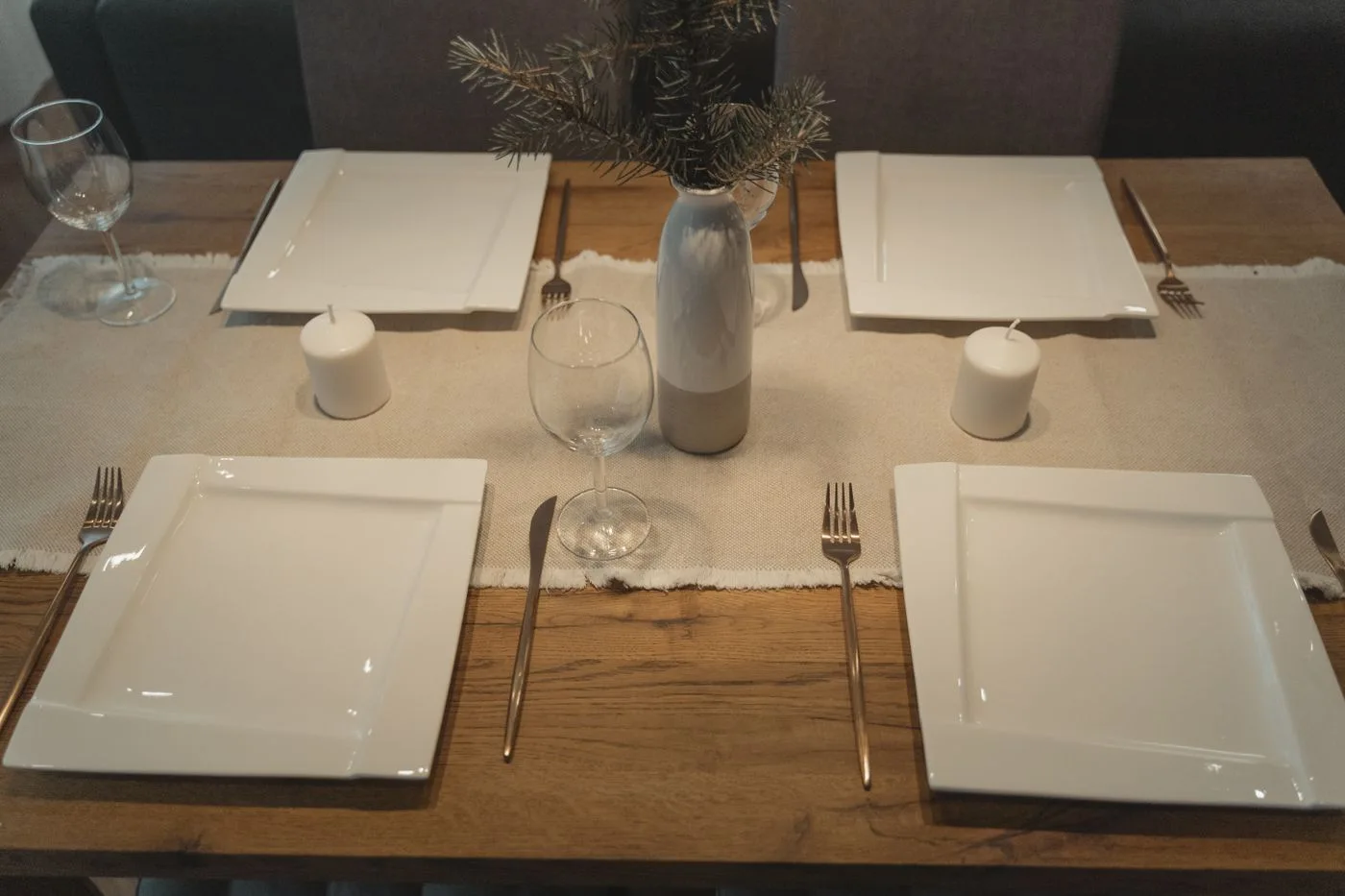
Set the table with what you have. Check that both people can sit comfortably and that serving dishes will fit. Choose lighting that lets you see the food and each other without creating unsafe arrangements around flames or cables. Leave enough space for ordinary movement; the room does not need a complete redesign for one dinner.
Give the guest a comfortable arrival
Offer a drink or another simple welcome that fits their preferences. Explain whether you are nearly ready or still cooking so they can settle without guessing. If you want help, ask for a specific optional task rather than expecting the guest to interpret your movements. They may enjoy joining in, or they may prefer to sit and talk.
Keep a small buffer in the timing. An ingredient may take longer than expected or conversation may delay a step. Choose a menu that can handle ordinary variation within appropriate food-handling limits. Avoid solving every delay by rushing or abandoning instructions. A calm adjustment is often less noticeable than frantic perfectionism.
Keep clearing up proportionate
Handle necessary food-safety tasks promptly and put suitable leftovers away according to reliable guidance. The rest of the washing can follow a manageable plan. Do not make the guest watch a complete kitchen deep clean unless that is the evening you both wanted. A few organized steps can close the meal without interrupting the conversation repeatedly.
Should I ask the guest to bring something? If you want to, make the request clear and optional where appropriate. What if the recipe goes wrong? Use a realistic alternative and communicate simply; the invitation is about spending time together. Do I need matching plates? Clean, suitable, comfortable tableware is enough for an ordinary shared meal.
Our relaxed weekend lunch guide explores a larger gathering. The pantry tomato pasta offers a familiar framework to adapt within your needs. Hosting one guest succeeds when you can enjoy the evening too.
Food-handling reference: FDA Safe Food Handling.