This article may include affiliate links. We may earn a commission from purchases, at no extra cost to you. Read our disclosure.
Dining-chair space should be checked with a person using the chair, not only with the furniture tucked neatly under the table. Pulling out, sitting, standing, and passing behind all affect the room. Test those ordinary movements before changing a rug, adding storage, or buying a larger dining set.
Start with the occupied meal
Place the table and chairs according to their intended use and any assembly or safety guidance. Check their condition and suitability for the household. Have people sit and stand as they normally would, accounting for individual access needs and any relevant professional advice.
Notice where chair backs, walls, doors, and nearby furniture interact. Keep necessary exits and walking routes clear. A narrow gap that exists on an empty floor plan may disappear once someone is seated, so measure and observe the complete arrangement rather than relying on a single furniture dimension.
Include the room's other uses
Look at the routes people take to the kitchen, another room, or storage during a meal. A chair should not require someone to move repeatedly merely to let the household function. If the room is shared for work or hobbies, test the transition as well as the dining setup.
Try a smaller suitable change before replacing furniture. Removing an unnecessary console or changing where an occasional item is stored may resolve the conflict. Move furniture only with appropriate permission, technique, and help; do not drag heavy items or compromise stability to test a layout.
Check rugs as part of movement
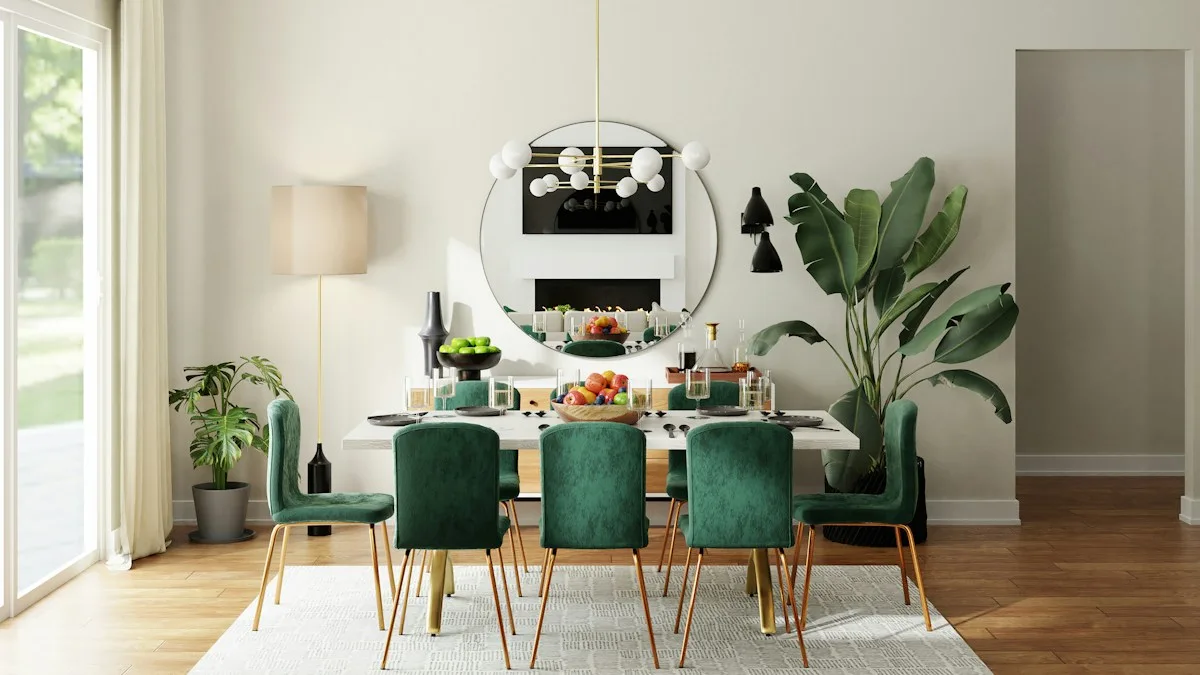
If a rug is involved, consider its full dimensions, edges, material care, and suitability for the floor and household. Test chair movement through an appropriate method before committing to the setup. A rug that frames the empty table attractively may interfere when chairs move across its edge.
Our comfortable work-corner guide applies similar thinking to occupied furniture. Use actual people and tasks to assess a space instead of treating a styled room image as a complete functional plan.
Buy through a specific gap
If new furniture is necessary, record the relevant dimensions and practical requirements together. Include chair pullout, individual comfort, table use, care, and access. Check the complete product information and suitable return or delivery arrangements rather than assuming a similar-looking set will behave like the old one.
The relaxed weekend lunch guide helps keep hosting realistic within the room you have. You can choose an appropriate guest number or meal arrangement instead of forcing every possible seat around the table.
Is there one correct clearance measurement? The suitable arrangement depends on the furniture, people, room, and relevant access requirements. Use appropriate professional guidance when needed and test actual movement. A generic number from a photograph cannot establish that your household will sit, stand, and pass comfortably.