This article may include affiliate links. We may earn a commission from purchases, at no extra cost to you. Read our disclosure.
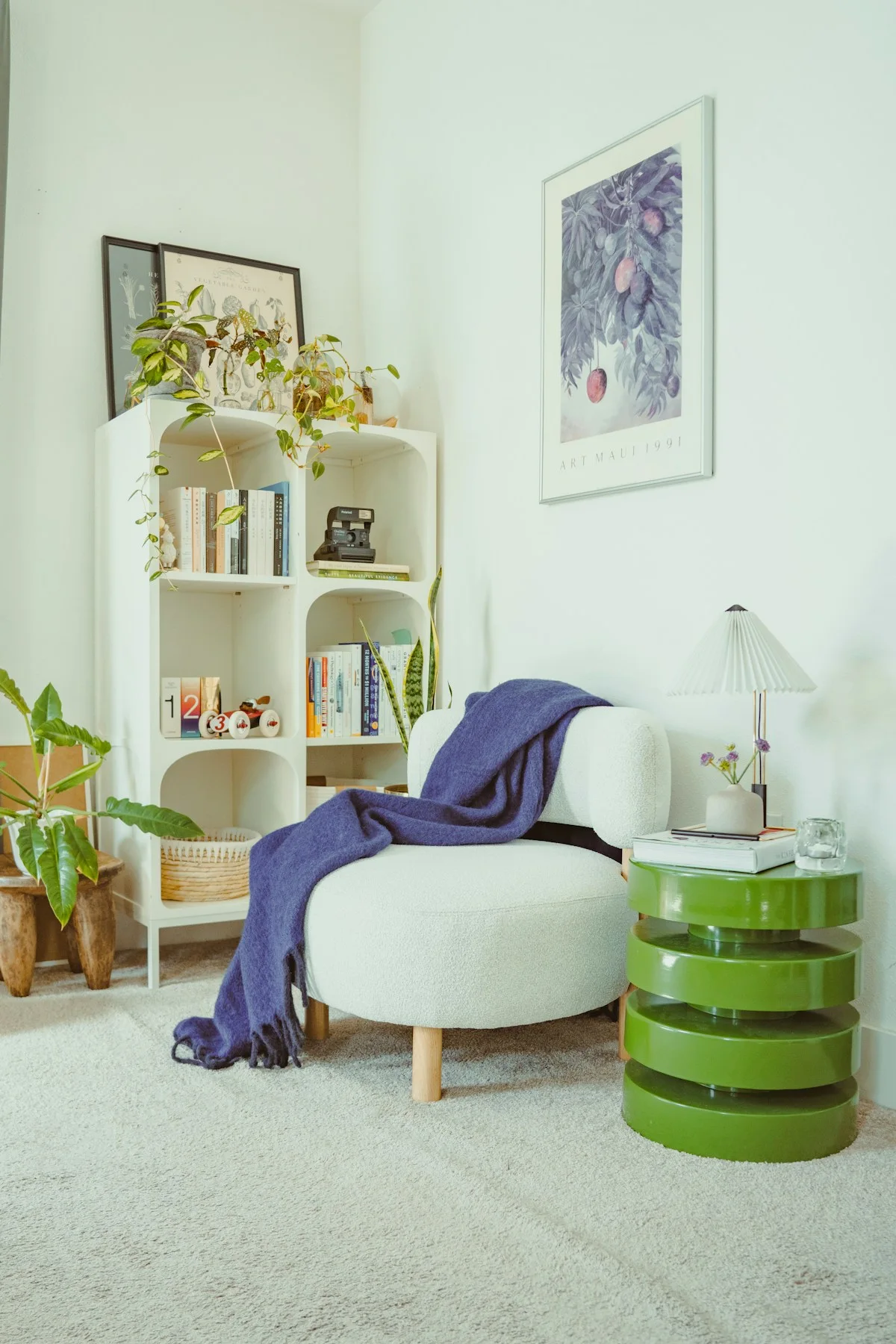
A reading chair becomes more useful when the nearby table holds the few things the reader actually needs. An attractive arrangement of books and objects can leave no room for glasses or a suitable drink. Start with the seated task, then choose a simple setup that supports reading and remains easy to return afterward.
Test the seated reach
Sit in the chair in your normal reading position and notice where you can comfortably reach without awkward movement. Individual needs vary, so use your own comfort and any relevant professional advice. Do not copy a furniture photograph's spacing as though it establishes the right arrangement for every person.
Check the table's stability, condition, and intended use. Consider the whole room, including necessary movement and access. A small round table can still obstruct a route if positioned poorly, while a larger one may serve well in a suitable location. Measure the actual occupied space before shopping.
Choose the essential surface items
Identify what you regularly use while reading. That might be the current book, appropriate glasses storage, or a suitable place for a drink. Keep liquids away from books, devices, and other items according to their requirements, and protect the table surface through a suitable method.
Remove objects that mainly compete with those essentials. Decorative pieces can have another appropriate place, and unread books do not all need to gather beside the chair. A clear usable portion of the table makes beginning and finishing simpler without requiring a permanently empty room.
Check the lighting separately
Use suitable lighting for your needs and follow all equipment instructions. A side table may support a lamp only when the complete setup is appropriate, including stability, clearances, and a safe cable route. Do not assume the table must carry a light if the room already provides a suitable arrangement.
Our home lighting guide helps think about the task before buying fixtures. Keep the reader's actual setting central, including the time of day and shared-room use, rather than selecting a lamp solely as decoration.
Give the session a gentle finish
Return the book to a recognizable suitable place, deal with dishes appropriately, and keep personal items protected. If several people use the chair, agree what stays and what travels with each reader. One person's permanent pile should not make the next person's seat awkward.
The library reading routine helps keep borrowed books distinct and their return requirements visible. A side table can hold the current title without becoming the household's entire book-management system.
Do I need a new table? Only if an existing suitable surface cannot meet the actual reach, stability, space, and care needs. Try a modest rearrangement first where appropriate. A useful reading corner comes from comfortable access and a manageable task, not from buying every item shown beside a chair in a catalog.