This article may include affiliate links. We may earn a commission from purchases, at no extra cost to you. Read our disclosure.
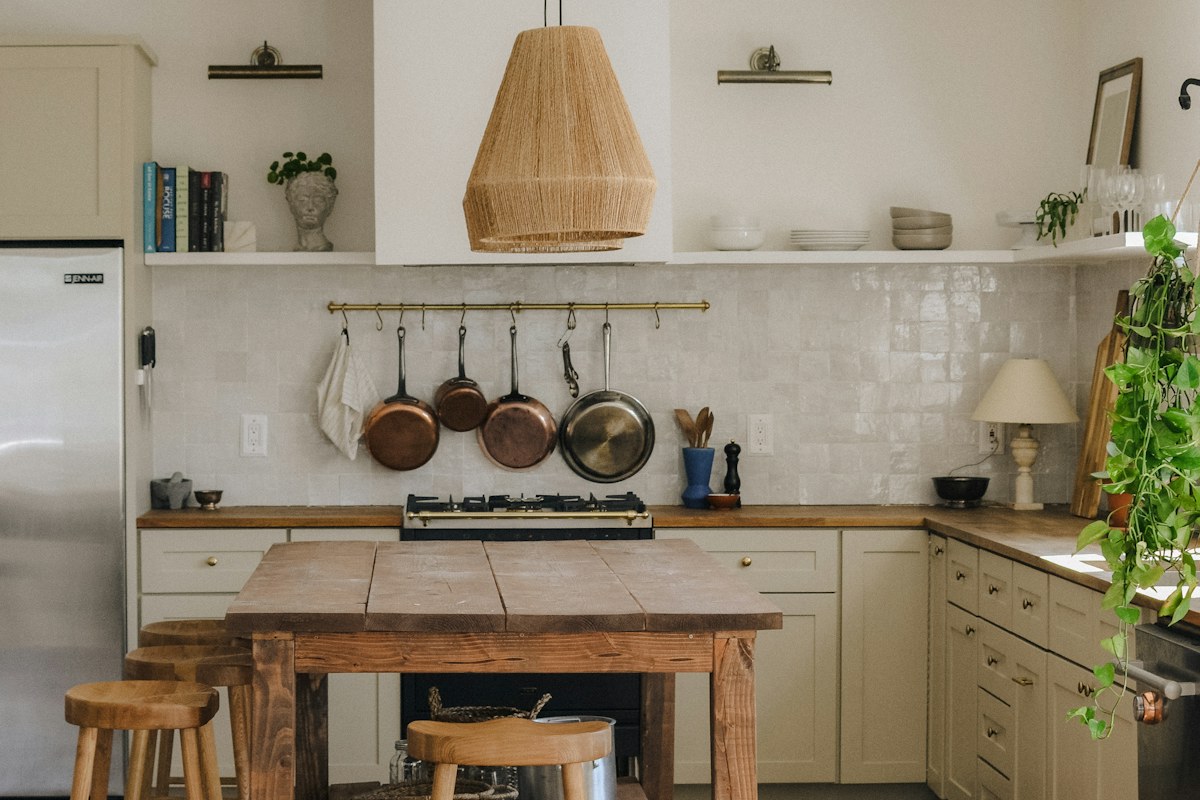
Kitchen stools need a useful resting position as well as a comfortable seat. A stool that projects into the route while tucked away can make the room feel crowded even when nobody is sitting. Compare the full shape with the actual island or counter before choosing through seat height and appearance alone.
Measure the complete stool
Use the maker's dimensions and consider the back, legs, footrest and any projecting fittings. A narrow seat can sit above a much wider base. Check the intended use, load guidance and any relevant assembly information rather than assuming every stool is suitable for a kitchen counter.
Measure the available space beneath and around the counter, including any brackets or cabinets. Follow appropriate clearances and consider the household's own movement and access needs. Do not plan a fit that depends on forcing the stool against an appliance or blocking a route used to carry hot food.
Test the tucked position
Place the stool where it would normally rest when unused, using a safe footprint marker if comparing before purchase. Check how far it projects and whether adjacent cupboards can operate appropriately. Look from the ordinary route into the room rather than only from the angle that makes the kitchen look widest.
The small entryway guide offers a useful principle for shared circulation: an object still occupies space when it has been pushed out of the way. A stool's resting position should be a genuine destination, not a temporary obstruction moved whenever someone needs the cupboard.
Include the seated movement
Try the stool according to its intended use, with attention to your own comfort and access needs. Check the relationship with the counter and how it moves when someone sits down or gets up. A neat tucked position does not compensate for an unsuitable seat or an awkward route once the stool is in use.
The dining-chair pullout check helps assess this changing footprint. Consider how many stools the household actually needs rather than filling every available edge. More seats can make each individual place harder to use if the supporting space remains the same.
Choose a manageable number
Decide which meals or activities the stools will serve and whether another existing seating area already meets the need. A single useful perch may suit the room better than a complete row imagined from a showroom display. Keep cleaning and appropriate surface access in the comparison as well.
Should you choose a stool without a back? That changes both its shape and the seating experience, so assess the actual model rather than treating it as an automatic space-saving answer. The useful choice fits the counter, the person and the resting route. A kitchen remains easier to use when its seating has a clear place both during and between meals.