This article may include affiliate links. We may earn a commission from purchases, at no extra cost to you. Read our disclosure.
The draining area beside a kitchen sink often becomes storage for things that have not quite finished a task. Clean dishes, used utensils, and an unopened parcel can end up competing for the same surface. Give the area one clear purpose at a time, using the sink and surrounding materials according to their actual requirements.
Identify what the space is designed to do
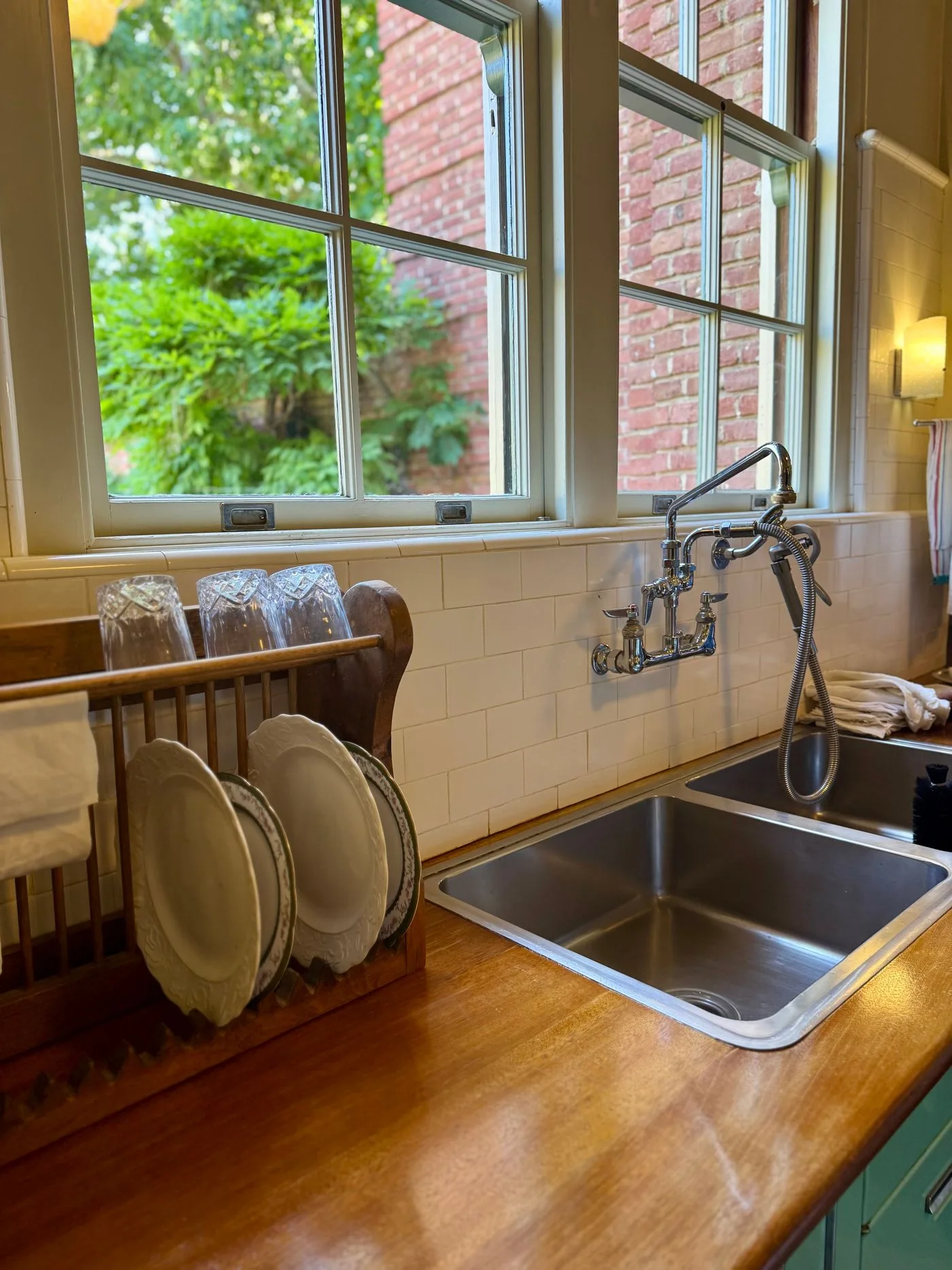
Look at the sink, draining surface, rack if supplied, and the nearby counter. Read relevant care information for the materials and equipment. A decorative board or tray should not become a permanent wet landing place unless it is suitable for that use. Protect surfaces from unnecessary moisture and damage.
Observe one ordinary washing session. Notice which items need draining, which need another appropriate drying method, and where the actual bottleneck occurs. A pan may simply be too large for the rack, while a collection of already-dry cups may be occupying space that could be released immediately.
Separate used and ready items
Keep the route through washing, appropriate drying, and returning clear. Used dishes should not mingle with items that are ready to store. Choose an arrangement that supports appropriate kitchen hygiene and makes the current state obvious to another person sharing the sink.
Return dry items when their care is complete rather than treating the rack as a second cupboard. If a frequently used item never reaches storage, consider whether its proper home is convenient enough. Repeatedly avoiding an awkward shelf is a useful clue about the arrangement.
Check the large-item problem
Try your usual pan, board, or serving dish within the manufacturer's intended washing and drying method. Do not balance something heavy against unstable objects simply to fit it into the rack. If the available space cannot support the item, choose a suitable alternative method or reconsider the equipment you use.
Our chopping-board workflow guide helps connect preparation with the care that follows. A board needs an appropriate completed route, not just a place to lean while you begin another task.
Keep unrelated objects elsewhere
Move mail, devices, and shopping to suitable separate locations before they establish a permanent claim on the draining surface. Give the displaced items an actual next action. Moving a paper pile from the sink to the dining table without a decision only transfers the obstruction.
The shared household admin guide helps create a proper route for papers. Keep the kitchen area focused on the work it needs to support, while leaving room for the household's real daily pattern.
Will a larger rack solve it? Only if its complete footprint, capacity, drainage, and care suit the sink and the items. First remove completed dishes and unrelated storage. A larger rack can make a small counter harder to use when the underlying problem is an unfinished final step.
Planning references: FDA: Safe Food Handling. Confirm current arrangements with the relevant provider.